A couple of weeks ago I went to Kyūshū with my wife, and we visited some jinja. I want to write about two of them here, one in this post and the other in the next.
The first one is at Kirishima Jingū (霧島神宮), a jinja that venerates Ninigi-no-mikoto, the grandson of Amaterasu Ōmikami who founded the Imperial line, at the mountain where he is said to have descended from the heavens. The jinja is ancient, and the main sanctuary buildings (which date from the eighteenth century) were designated National Treasures in 2022.
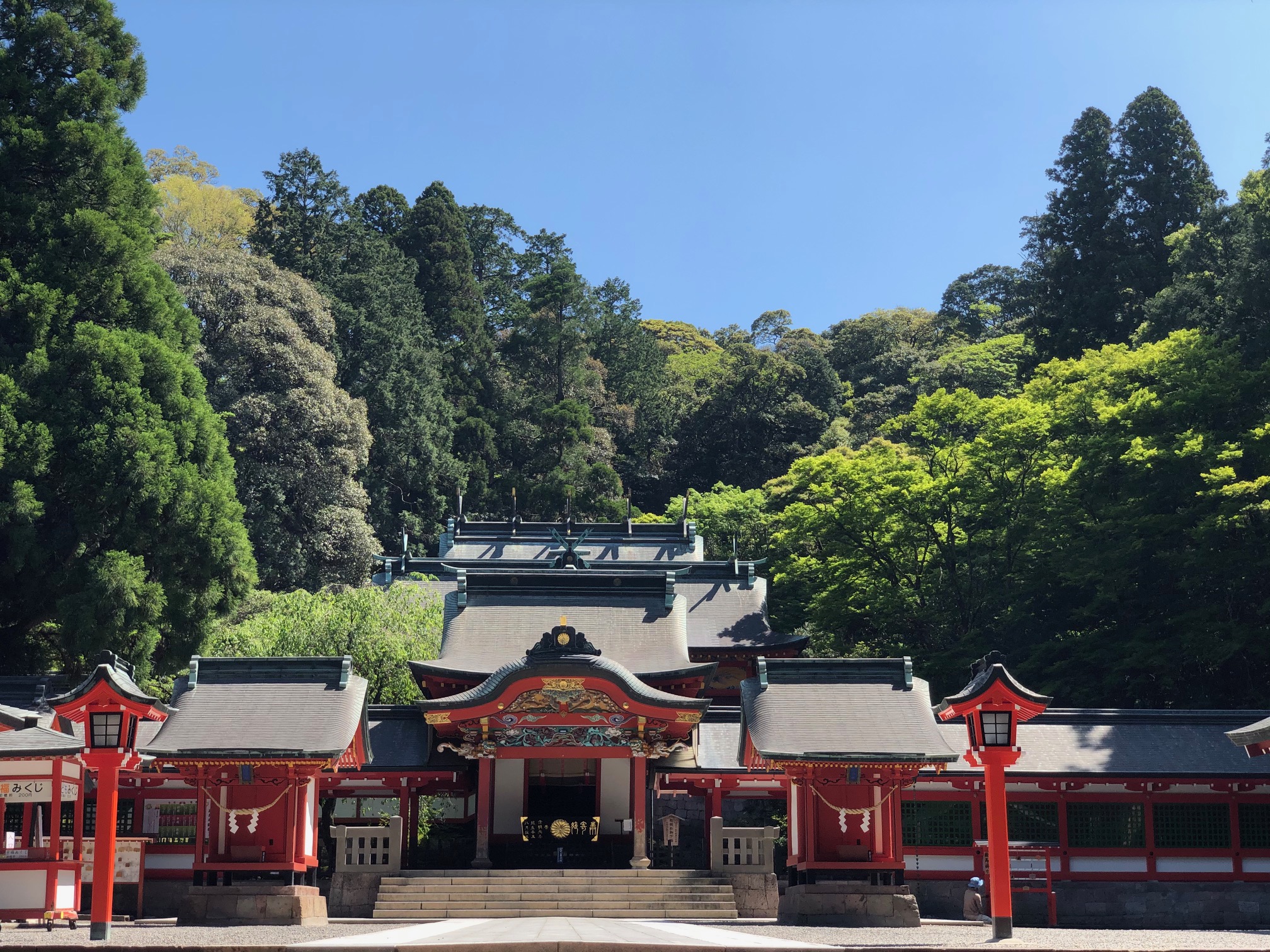
This is not the one I want to write about.
In the precincts, a short way up a path behind the sanctuaries, is Yama Jinja, or maybe Yama no Kami no Yashiro (山神社).
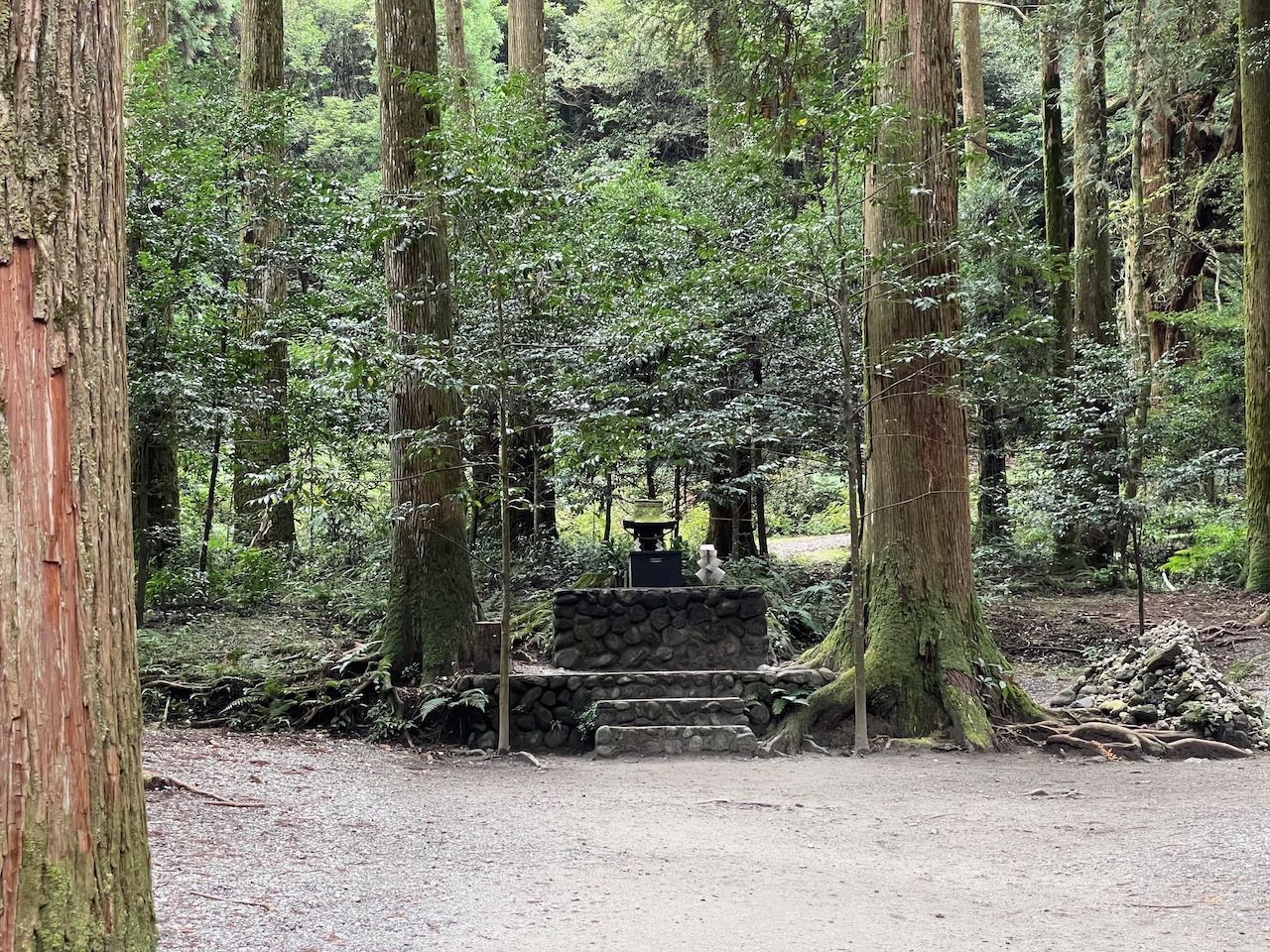
As you can see from the photograph, it is a very small stone hokora (祠) on a stone platform. There is no indication of which kami is venerated here beyond the name of the jinja, so my guess would be that it is the kami of the mountain that the jinja is on — possibly multiple kami. There are many jinja like this across Japan, a lot of them in the precincts of larger jinja.
What makes this one special is that it has a twice-monthly matsuri, its own goshuin, and its own omamori. At the jinja itself there are wooden omamori, divided into two sections by a channel in the wood. You make your offering (¥500), take an omamori, and write your name and request on one section. You then snap the omamori in half along the channel, hang the half on which you wrote your request on the provided frame, and take the other half away with you. On the days of the matsuri (the first and sixteenth of the month) another omamori is available from the main jinja omamori office, which is also where you can get the goshuin.
Immediately behind the hokora is the stump of a very large tree, which has had another tree planted in the centre. There is no information about the tree either, but I strongly suspect that it was the original subject of veneration, and that the hokora was placed after it died.
There is good reason to think that veneration of the unnamed kami of, or in, particular areas was an important part of the foundations of Shinto, and this jinja is evidence that the tradition is alive today. I would even risk saying still alive today, but I do not actually have strong evidence of continuity.
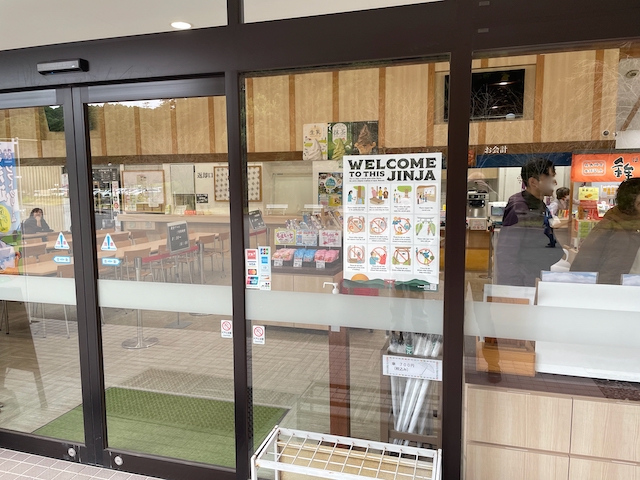
As a postscript, Kirishima Jingū was the first jinja where I saw the poster that we created to give advice to foreign visitors actually in use. Having seen the real thing, I think it came out well — the title stands out, and the images are easy to read.